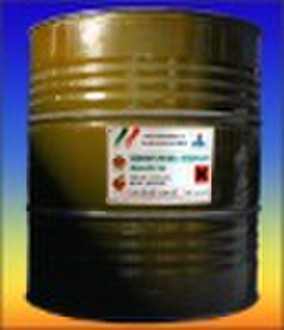
PERCHLORETHYLENE


JENNY ZONG
Contact person
Basic Information
| CAS No. | 127-18-4 |
|---|---|
| Other Names | TETRACHLOROETHYLENE |
| MF | C2-CL4 |
| Place of Origin | Shandong China (Mainland) |
| Purity | 99.83% |
| Brand Name | JUHUA |
| Classification | High Purity Reagents |
Perchloroethylene: Uses Tetrachloroethylene is an excellent solvent for organic materials. Otherwise it is volatile, highly stable, and nonflammable. For these reasons, it is widely used in dry cleaning. Usually as a mixture with other chlorocarbons, it is also used to degrease metal parts in the automotive and other metalworking industries. It appears in a few consumer products including paint strippers and spot removers. Production Michael Faraday first synthesized tetrachloroethene in 1821 by thermal decomposition of hexachloroethane. C2Cl6 → C2Cl4 + Cl2Most tetrachloroethene is produced by high temperature chlorinolysis of light hydrocarbons. The method is related to Faraday's discovery since hexachloroethane is generated and thermally decomposes.[1] Side products include carbon tetrachloride, hydrogen chloride, and hexachlorobutadiene. Several other methods have been developed. When 1,2-dichloroethane is heated to 400 °C with chlorine, tetrachloroethene is produced by the chemical reaction: ClCH2CH2Cl + 3 Cl2 → Cl2C=CCl2 + 4 HClThis reaction can be catalyzed by a mixture of potassium chloride and aluminium
Delivery terms and packaging
Port: any china port
Payment term
Letter of credit
Telegraphic transfer

-
Payment Methods
We accept: